Pernod Ricard: Scaling operational intelligence across 30 facilities
Altizon’s DFX Platform unified Pernod Ricard’s production, quality, and sustainability data by replacing fragmented, paper-based…
DFX, a cloud-native MES, unifies all plants into a single shared production record, while time-critical capture stays on the line for real-time control.
DFX runs edge to cloud by design: capture and time-critical operator tools stay on a connector at the line, while the shared production record, cross-plant reporting, and AI run in the cloud. Recording production never waits on a live cloud link, and the connector reconciles with the cloud when it returns.
DFX is built on a cloud- native architecture designed for the scalability and security standards a regulated food and beverage operation demands.
Connect your identity provider — Azure AD, Okta, or any SAML/OAuth provider — for single sign- on. Granular role-based access then gives the right people the right data, from the shop floor to the C-suite.
Set up DFX once in the cloud. Access control then decides who sees what, so a line operator, a plant manager, and corporate each get the right view of the same data.
View your plants
Who sees it
Once DFX is live, your teams work from one real-time record. Losses surface while the line is still running, quality holds catch problems before scrap, and every batch stays traceable across one plant or all of them.
Read machines, PLCs, and sensors over standard protocols like OPC-UA and MQTT, normalized into one source of truth, starting with the lines that matter most.
Model each plant once, from lines and recipes to quality checks and roles, then reuse that template for the next plant.
Activate the DFX suites by role, baseline performance, and surface outliers. Teams work from live data in weeks, not months.
Add the next line or plant to the same record. Benchmark across sites and replicate proven line and recipe setups.
Deploy predictive models that flag quality and maintenance issues early, and GenAI agents that answer plant questions in plain language.

Altizon’s DFX Platform unified Pernod Ricard’s production, quality, and sustainability data by replacing fragmented, paper-based…
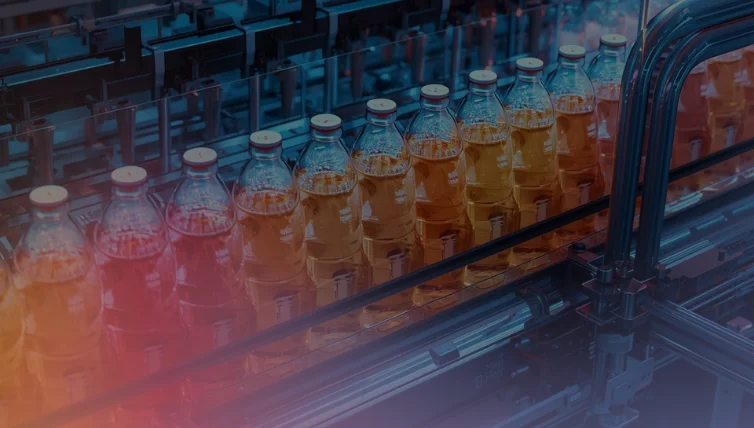
Altizon’s DFX Platform helped large beverages major connect multi-OEM bottling lines and utilities into a…
A cloud MES is a manufacturing execution system delivered as a service over the internet, rather than installed on servers 5 Confidential inside each plant. The vendor hosts the software, your plants connect to it, and operators use it through a browser. DFX is a cloud-native MES for food and beverage manufacturing.
In practice, yes. SaaS (software as a service) is the subscription model where a vendor hosts and maintains the software; "cloud" describes where it runs. A cloud MES is normally delivered as SaaS, which is how DFX is offered.
Both run and record production. The difference is where the software lives and who maintains it. An on-premise MES runs on servers you install and patch at each plant, which leaves every site on its own island. A cloud MES runs in the cloud, with no per-site servers, central updates, and one record across every plant. On-premise still has a place for sites with no reliable connectivity or strict air-gap requirements.
A software connector at the plant reads machines and control systems over standard industrial protocols and streams the data to the cloud. There is no new control hardware to add, and the same connector can also feed alerts to Slack and pull production orders from your ERP.
Data capture and time-critical operator tools run on the connector at the plant, so collecting machine data and recording production do not depend on a live cloud link moment to moment. If the connection drops briefly, the connector keeps recording locally and reconciles with the 6 Confidential cloud when it returns. How much local buffering each site needs is sized during deployment.
DFX is built for regulated operations: SOC 2 controls, encryption in transit and at rest, role-based access so people see only what they should, and timestamped audit trails and traceability that meet food and beverage requirements.
Yes. In a shared multi-tenant cloud your data is logically separated so other companies cannot see it. If you need physical isolation, DFX also runs as a dedicated private cloud on your own infrastructure.
DFX is a cloud subscription that scales with how many plants, lines, and machines you connect and which modules you deploy. You can start with the lines that matter most and expand from there, with no upfront server cost.
Start with the plants that matter most, with no servers to install, and see them live in weeks.